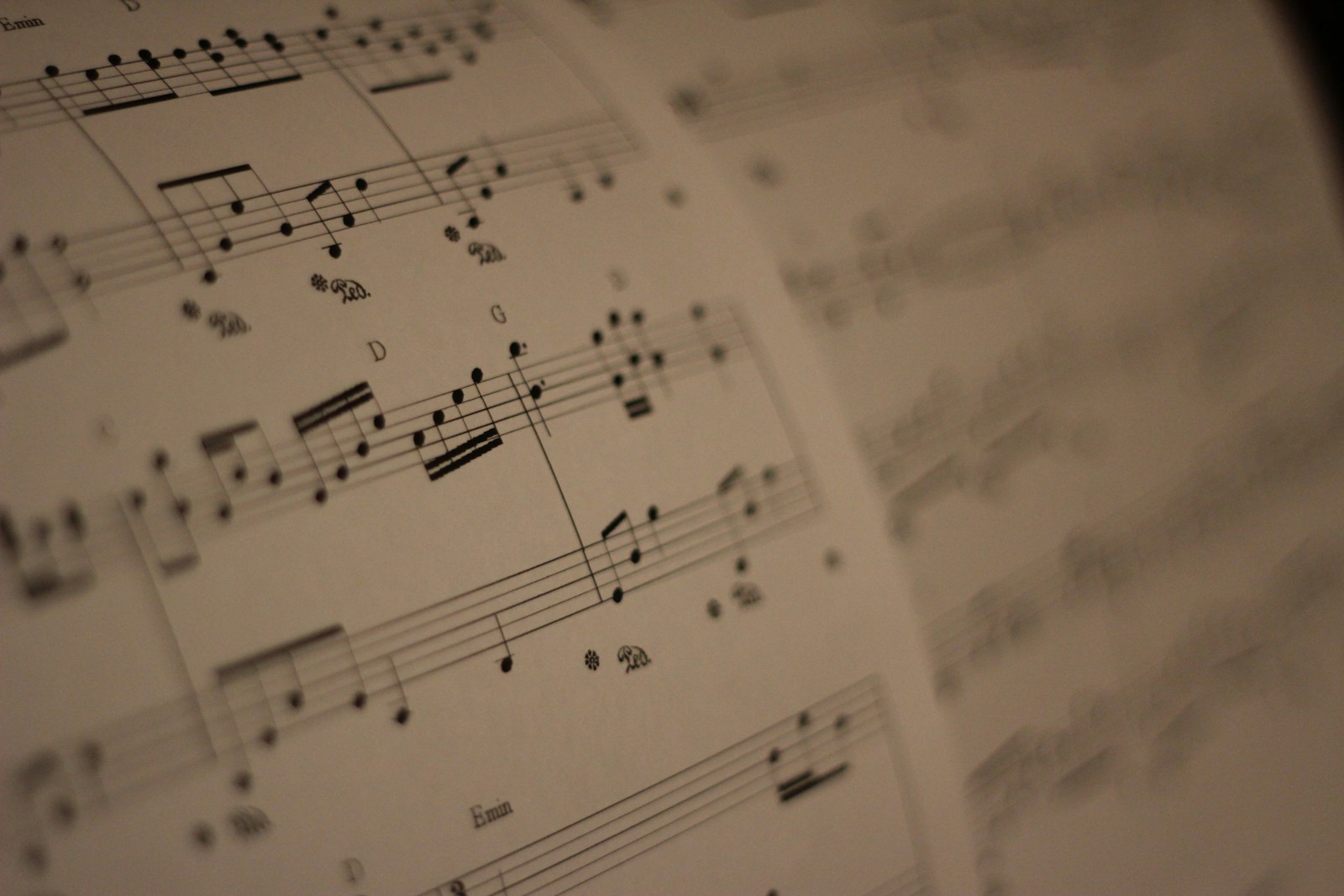
Learning to read sheet music might seem overwhelming at first but it opens up a whole new world of musical possibilities. Whether you dream of playing your favorite songs or joining a band understanding the basics of sheet music is your first step toward making music on your own.
You don’t need any prior experience or special talent to get started. With a bit of patience and the right guidance you’ll soon recognize notes and rhythms on the page. Let’s break down the essentials so you can start reading music confidently and enjoy every note along the way.
What Is Sheet Music?
Sheet music shows musical notes, rhythms, and instructions using a system of symbols on paper or screen. You find notes, staffs, clefs, and symbols that represent pitch, timing, and expression. You read these elements from left to right across five horizontal lines called a staff.
Each note’s position on the staff shows which pitch to play. Common clefs, like treble or bass, set the reference for note names. Rhythmic symbols, such as whole notes, quarter notes, and rests, indicate duration and pause. Dynamics, tempo marks, and articulation signs appear as extra notations to guide expression based on a composer’s intention.
You see sheet music in all genres—classical pieces, pop lyrics, and jazz arrangements. Learning to interpret these symbols gives you access to millions of songs and musical scores readily available online and in print.
Understanding the Staff and Clefs
Sheet music displays musical notes on a series of horizontal lines called the staff, each line and space indicating a distinct pitch. Clefs at the beginning of the staff specify which notes each line and space represents, enabling you to read music accurately.
The Lines and Spaces
The staff uses five horizontal lines and four spaces to represent different notes in ascending order. Each position on the staff stands for a specific pitch, creating a clear structure for reading notes. Ledger lines extend this structure, letting you read pitches beyond the staff’s normal range. Frequent practice memorizing these placements helps you recognize notes faster.
Treble and Bass Clefs
The treble clef, or G clef, marks the G note on the second line from the bottom and is used for higher-pitched instruments or voices. Its lines are E, G, B, D, F, and its spaces are F, A, C, E. The bass clef, or F clef, places the F note on the fourth line and represents lower pitches. Memorizing each clef’s pattern with mnemonic devices increases reading speed and accuracy. Use the treble and bass clefs together when learning pieces that span different pitch ranges, such as piano music.
Learning Notes and Their Values
Understanding note values lays the groundwork for reading sheet music accurately. Each note shape signals how long you play a sound within a measure.
Whole, Half, Quarter, and Eighth Notes
Identifying whole, half, quarter, and eighth notes informs your sense of rhythm on any instrument. A whole note lasts four beats in common time, so you hold the sound for an entire measure in 4/4 pieces. A half note covers two beats, filling half of a 4/4 measure for each note. A quarter note equals one beat, resulting in four notes per common-time measure. An eighth note takes half a beat, appearing frequently in faster passages or as pairs joined by a beam. These durations create a framework for counting, playing, and staying in time with the music.
Rests and Their Meanings
Recognizing rests lets you play with accurate timing and phrasing. Each rest symbol matches a note in value, but it signals silence for that duration. A whole rest means four beats of silence, matching a whole note’s length. A half rest spans two silent beats, and a quarter rest indicates a single beat of silence. An eighth rest lasts half a beat, often appearing in quick sequences. Dotted rests extend a rest’s length by half its value, providing flexibility in rhythm patterns. Mastering both notes and rests supports solid timing and expressive playing.
Reading Key Signatures and Time Signatures
Reading key signatures and time signatures gives you essential clues about both pitch and rhythm in every piece of sheet music. Understanding these notations ensures you interpret each note and beat correctly.
Understanding Key Signatures
Key signatures define which notes stay sharp or flat throughout a song. You’ll find key signatures placed right after the clef symbol at the start of each line on the staff. If you see a key signature with one sharp, you’re in the key of G major or E minor, meaning every F becomes F# unless a natural sign appears. For three flats, you’re in the key of E flat major or C minor—every B, E, and A become B♭, E♭, and A♭. Recognizing these patterns helps you anticipate which notes you’ll consistently play, saving time and reducing reading errors. Use tools like the circle of fifths to connect each key signature to its major or minor scale and sharpen your music reading skills.
Reading Time Signatures
Time signatures set the pattern for musical rhythm in each measure. You’ll spot time signatures just after the key signature, appearing as stacked numbers. The top number says how many beats fill each measure, while the bottom number shows which note value counts as one beat. In 4/4 time, you count four beats per measure, with each quarter note getting a beat—count like this: 1, 2, 3, 4. In 3/4 time, count each measure as 1, 2, 3, matching the style of a waltz. Practicing different time signatures with a metronome builds your rhythm accuracy and helps you lock into the song’s feel. When you combine this understanding with note recognition, you turn printed music into a reliable, readable guide for playing any piece.
Interpreting Other Common Symbols
Reading sheet music requires understanding more than notes and rhythms. You’ll interpret other symbols that instruct you on how to play each passage with the right energy and form.
Dynamics and Articulations
Dynamics and articulations guide the intensity and style in every measure. Dynamics symbols, like “p” (piano) for soft and “f” (forte) for loud, tell you how forcefully to play or sing. Find variations such as “mf” (mezzo-forte) for medium loud and crescendos (gradually louder) or decrescendos (gradually softer). These symbols appear below or above the staff and change the mood of your performance.
Articulations define the attack and length of notes. Dots above notes (staccato) mean play them short and detached. Curved lines (slurs) connect notes smoothly in a legato style. Accents (>) over notes signal you to emphasize them with more force. These notations add detail and character to each musical phrase.
Repeats and Endings
Repeats and endings explain how to navigate sheet music passages. Double bars with two dots (:) before or after a section show you to repeat that part. If a piece has multiple endings, you’ll see labeled sections—like 1., 2.—at the end of measures. Play the first ending, repeat the section as marked, then skip to the second ending after your repeat, creating correct structure and flow for the piece.
Recognizing these performance directions allows you to interpret the composer’s full intent. Combining this knowledge with your note and rhythm reading skills supports expressive, accurate music interpretation.
Practice Tips for Beginners
Focus on learning note locations on the staff by using mnemonics like “Every Good Boy Does Fine” for treble clef lines and “FACE” for spaces. Reinforce this knowledge with flashcards or note-naming apps to help memorize each note’s position.
Clap and count note durations out loud to internalize rhythms. Combine this with a metronome to practice whole, half, quarter, and eighth notes, keeping your timing steady as you progress.
Break music into small sections instead of trying to learn entire pieces at once. Start with a few measures, then combine sections as you become more confident, which makes complex pieces manageable.
Practice key signatures and accidentals by running through major and minor scales, linking each scale to its key signature. Use the circle of fifths to visualize and understand key relationships quickly.
Look for musical patterns and intervals such as scales and thirds. Recognize these patterns in sheet music to read more efficiently, allowing you to predict notes based on familiar sequences.
Play short exercises or simple pieces on your instrument or a keyboard, even a digital one. Put theory into action by visually identifying notes and playing them to build the symbol-to-sound connection and develop motor skills.
Set a daily practice routine and stick to small increments of consistent practice. Combine reading, clapping rhythms, and hands-on playing to steadily improve your sight-reading and overall fluency with sheet music.
Conclusion
Learning to read sheet music opens up a world of musical possibilities you might never have imagined. With each practice session you’ll find the symbols and patterns become more familiar and your confidence will grow.
Stay patient with yourself and remember that every musician started as a beginner. Keep exploring new pieces and challenging yourself and soon you’ll be reading music with ease and enjoying the process along the way.
No responses yet